Making Generative AI More Token-Efficient
An experiment exploring how far token consumption can be reduced without compromising answer quality — achieving 30% optimization.
Token OptimizationGenerative AI
AI PRODUCT BUILDER
01 — ABOUT
Beyond the screens, I’m usually listening to a good business podcast, exploring the universe through astrophysics and space tech, or playing the occasional badminton game.
PRODUCT DISCOVERY
USER-CENTRIC DESIGN
AI-ASSISTED EXECUTION
02

02.1
I designed and built a RAG-based learning assistant that turns uploaded PDFs into an interactive study experience, combining text and voice Q&A with summary points, three-level structured notes, quizzes, and a session analysis feature to assess the user’s learning patterns and readiness with the PDF content.
0+
Learning Workflows
0%
Token Optimization
Impact
Turned passive document consumption into an active learning experience, bringing explanation, practice, and self-assessment into a single workflow.

02.2
I shaped Sankalp’s product vision and architecture, designing the UX and information architecture across all six modules while developing Margdarshak’s recommendation, chatbot, and roadmap logic.
0
Connected Modules
3rd
Prize at Avishkar Project Competition
Impact
Designed to make career guidance more accessible for students, working professionals, and people looking to upskill or transition into the IT industry.

02.3
I’m shaping Vistar from the ground up, defining its product vision, architecture, and interconnected venture journey while designing the experience across its core modules. I’m also developing the AI-driven systems that connect opportunity discovery, feasibility, venture formation, participation, and ongoing operations into one product. Vistar is being built for aspiring entrepreneurs, investors, and people looking to participate in ventures beyond traditional paths to business ownership.
0
Interconnected Modules
1st
Prize at Avishkar Project Competition
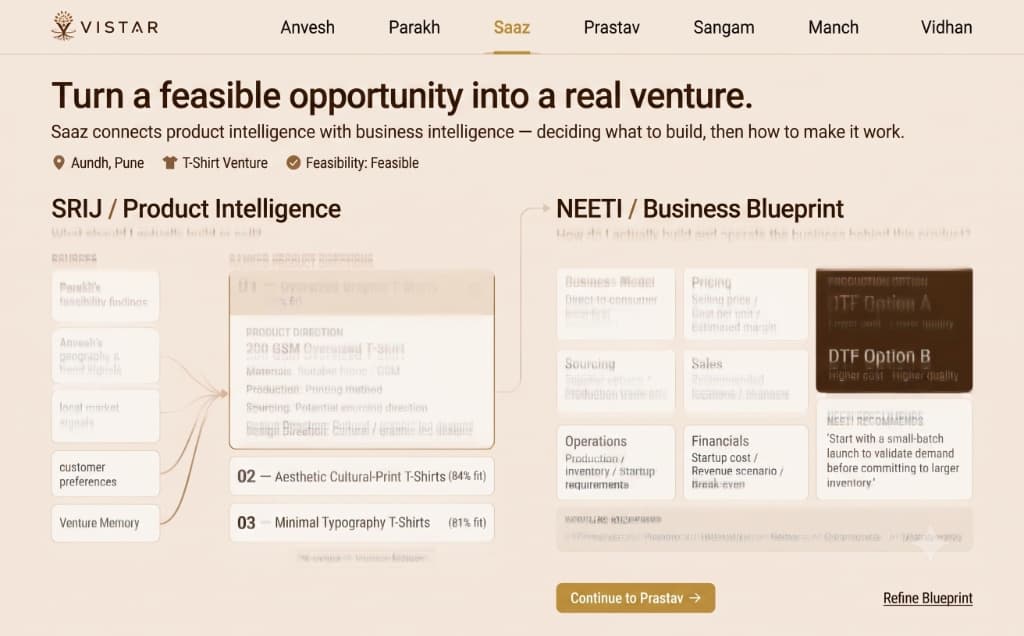
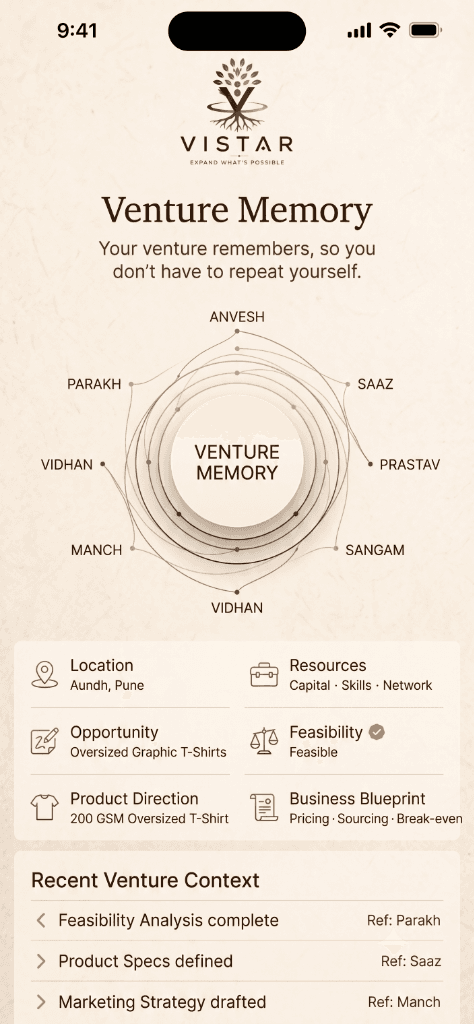
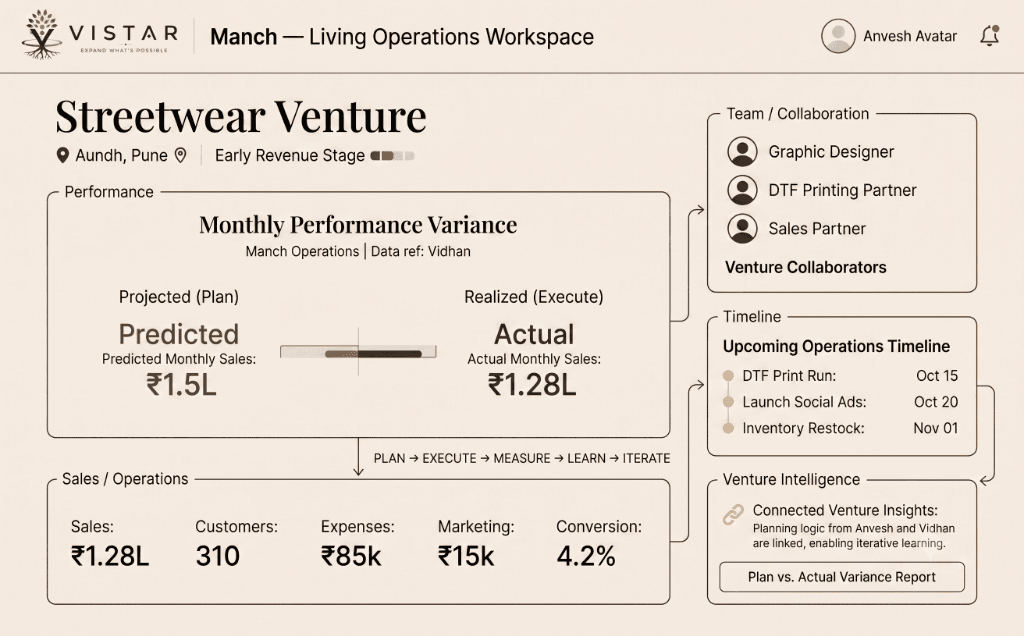
In Development — Not Fully Functional
02.4
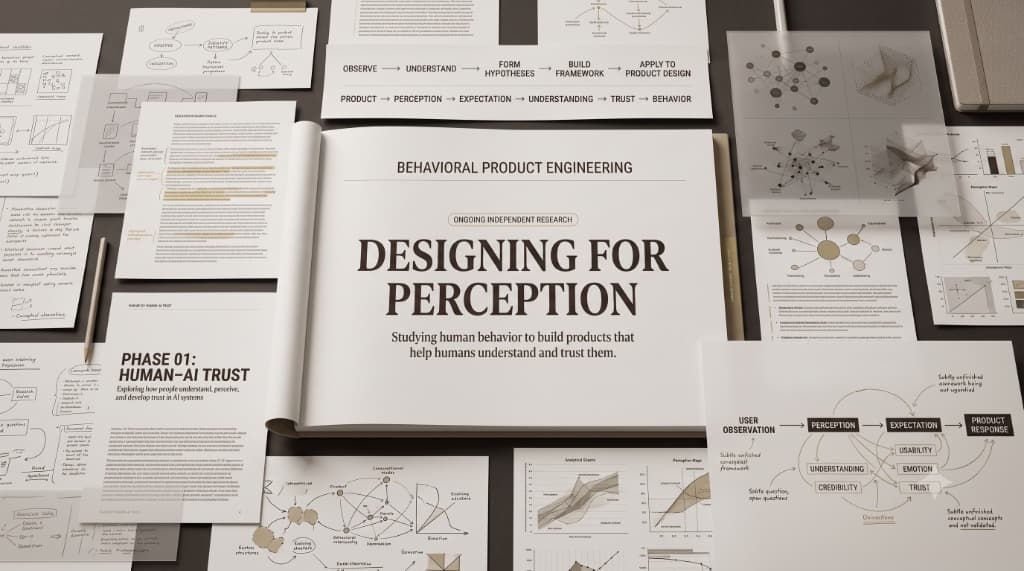
I’m studying consumer psychology and the perceptions people form while assessing a product, exploring how those perceptions influence their expectations, understanding, and trust. The goal is to develop a framework for designing products that align with and satisfy the mental expectations they create in their end users.
Research Progression
Phase 01 — Human–AI Trust
Literature synthesis examining calibrated reliance, algorithmic aversion, and cognitive mechanisms in AI interaction.
03
An experiment exploring how far token consumption can be reduced without compromising answer quality — achieving 30% optimization.
How tech companies turn zero-price access into adoption, habit, and revenue.
04
A selection of my most relevant skills and technologies.
Technical & AI Foundation
“What I build with”
Product & Systems Thinking
“How I think and build”
Platforms & Software
“Execution environments”
05


Coursera · IBM
IBM
Avishkar Project Competition
Selected for Zonal Level

Goethe-Institut
Coursera
06
2026 Atharva More · All Rights Reserved